
Bonito season opens with stable supply, smaller fish
By Chris Loew • Published: May 25, 2026
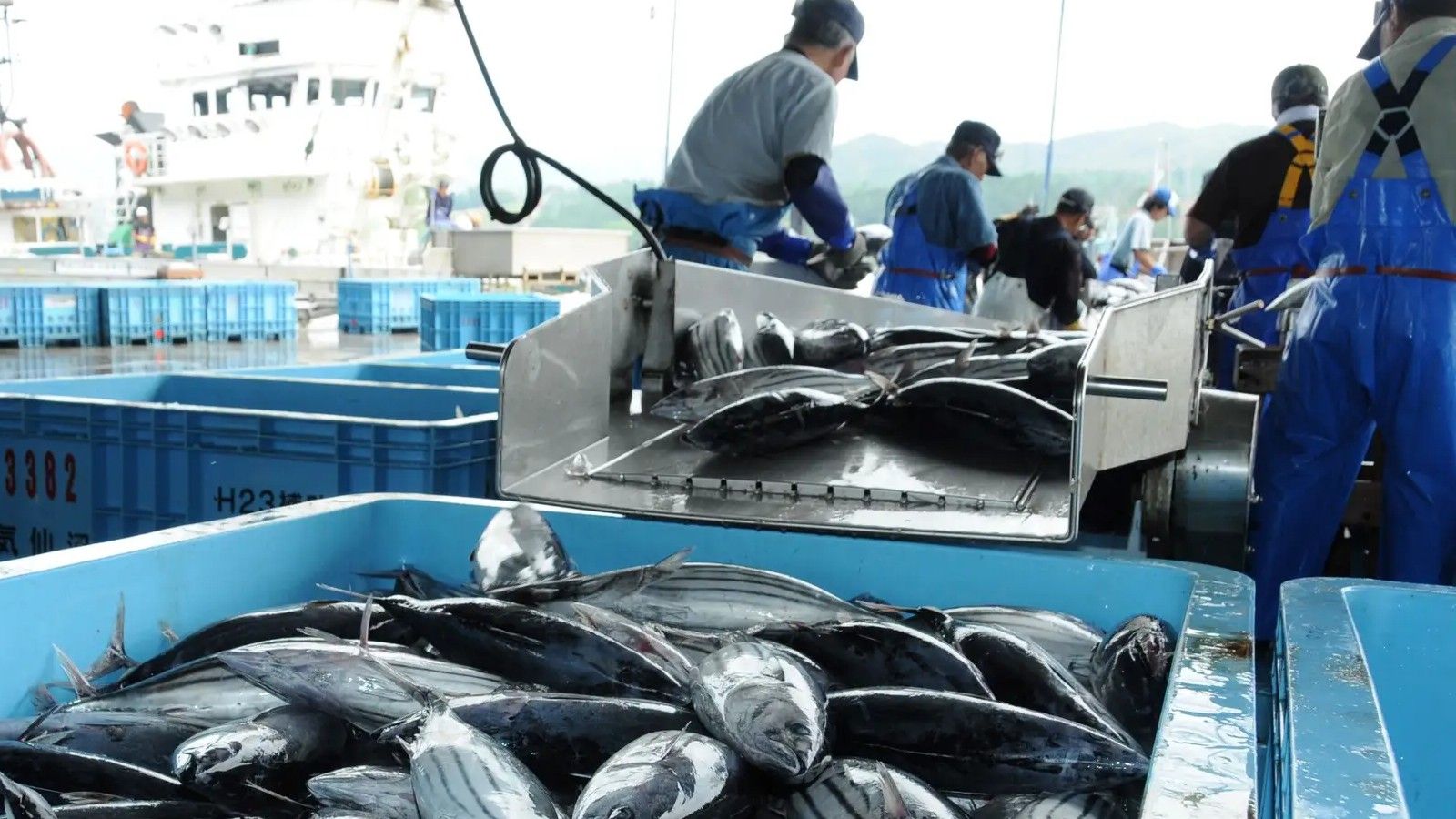
Bonito (skipjack tuna) arrivals at Tokyo’s Toyosu Market have remained stable through the opening phase of Japan’s spring hatsugatsuo, or “early bonito,” season, with wholesale prices in early-to-mid May holding close to year-earlier levels despite a shift toward smaller fish.
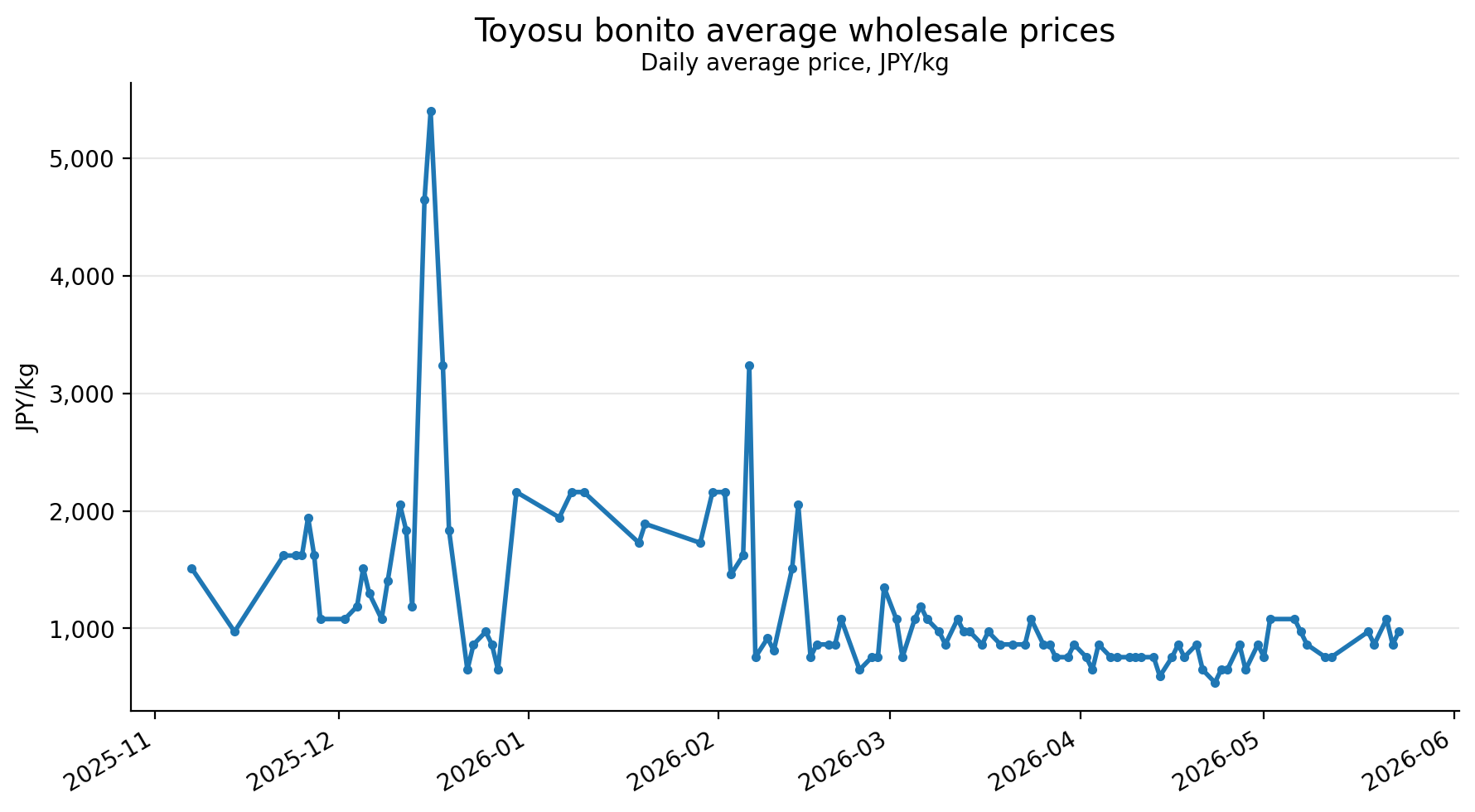
The Nippon Keizai Shimbun reported that the average wholesale price for bonito at Toyosu in early-to-mid May was JPY 880 (USD 6.10, EUR 5.40) per kilogram, down about 1 percent from the same period of 2025 but roughly 20 percent higher than 2024. According to the report, more of this season’s arrivals have consisted of smaller 1.5-kilogram to 2-kilogram fish rather than larger 3-kilogram to 5-kilogram fish.
Daily Fisheries Economic News, known in Japan as Suikei, reported that fresh bonito arrivals at Toyosu in March and April exceeded year-earlier levels. The publication attributed the increase to a recovery in landings in southern Kyushu and stronger landings from Ainan, Ehime Prefecture.
The improved stability follows an unusually poor 2025 season for fresh bonito.
The Japan Fisheries Information Service Center (JAFIC) said in its annual 2025 fishery and ocean conditions report that nationwide pole-and-line fresh bonito landings totaled 16,000 metric tons (MT) in 2025, 44 percent that of the previous year and 47 percent of the previous four-year average. Purse-seine fresh bonito landings totaled 8,000 MT, or 7 percent of the previous year’s level. JAFIC said the poor catches last year were especially pronounced in the Tohoku fishing grounds, with Kesennuma landings falling to 18 percent of the previous year. The organization said one likely factor was weak northward migration into waters around Japan, particularly the near absence of smaller 2-kilogram to 3-kilogram fish migrating toward the Tohoku region during summer and autumn.
In Japanese markets, the bonito landed during the spring northward migration period are called hatsugatsuo, or “early bonito.” These fish are generally comparatively lean and clean-tasting compared with autumn modori-gatsuo, or “returning bonito,” which typically contain higher fat levels after feeding in northern waters.
Bonito typically continue moving northward through spring and early summer, with fishing activity later shifting toward more northerly ports including those in the Tohoku region. Kesennuma in Miyagi Prefecture is one of Japan’s major bonito landing ports.
JAFIC’s FY2026 bonito and albacore outlook meeting, held at the Kesennuma fish market on May 13, projected that bonito catches would improve from recent poor years but remain below the five-year average, according to local newspaper Sanriku Shimpo. The report also said schools of bonito moving north toward Tohoku in April were smaller than usual.
Sanriku Shimpo reported that JAFIC forecast landings of autumn modori-gatsuo in the 1.8-kilogram to 3-kilogram range at about 3,500 MT, or roughly 60 percent of the five-year average, while larger 3-kilogram to 4-kilogram fish were forecast above average at about 2,400 MT.