
Seafood Show Osaka 2026 features products, aquaculture and processing tech
By Chris Loew • Published: April 28, 2026
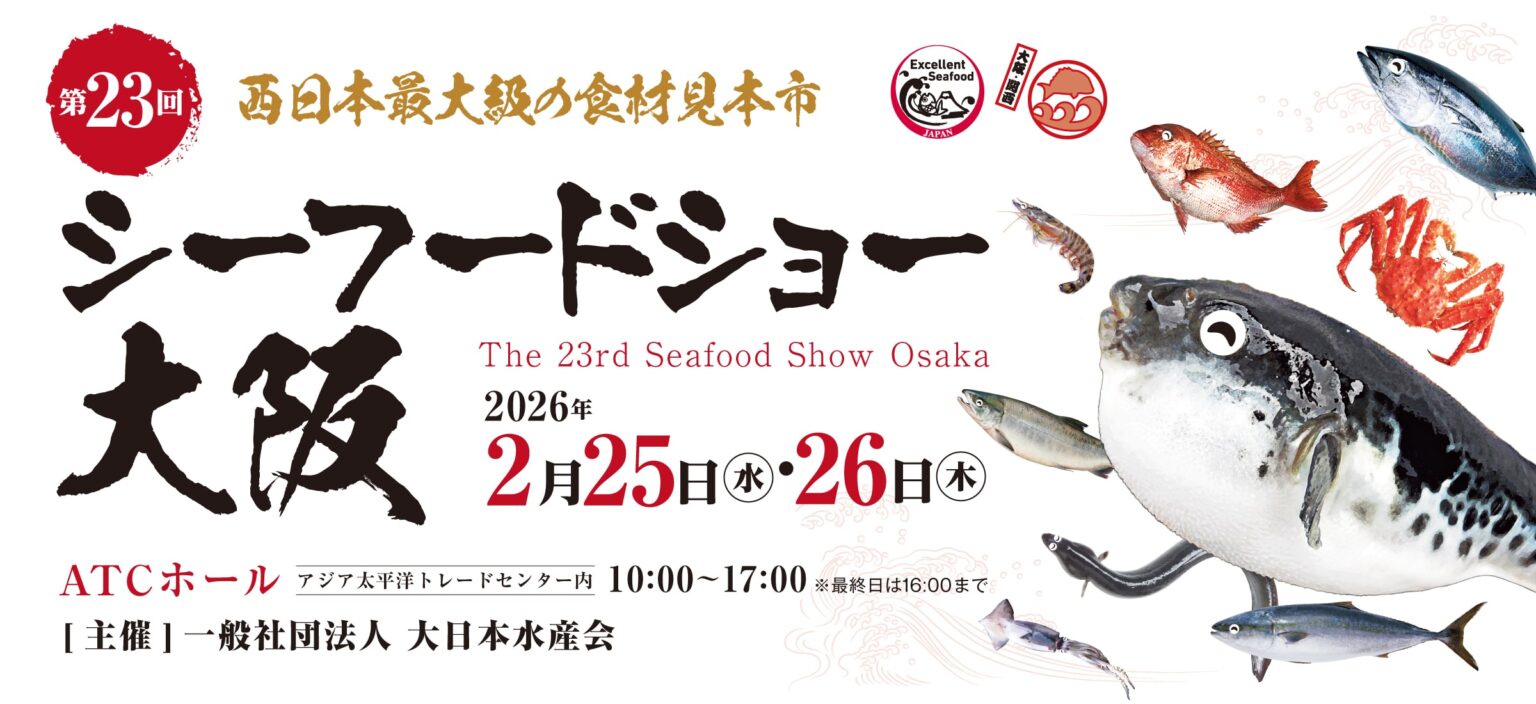
The Seafood Show Osaka 2026, held February 25–26 at ATC Hall in Osaka, featured 223 exhibitors presenting seafood products, processing equipment, aquaculture, and logistics, according to the show secretariat, Exhibition Technologies Co., Ltd.
The Seafood Show Osaka is organized into themed zones covering aquaculture, freshness and logistics technology, eco-labels, sanitation management, and sushi-related products. The 2026 edition included dedicated areas for aquaculture and aquaponics, as well as sections focused on processing and cold-chain systems. Exhibitors included seafood suppliers and trading companies, equipment manufacturers, research organizations, and overseas companies. Seminars held alongside the exhibition covered export requirements, aquaculture development, sustainability, and seafood processing technology, with presentations by government agencies, industry groups, and research institutions.
Several companies offered domestic and imported seafood.
Osaka-based OUG Holdings presented a range of products including farmed yellowtail under its “Hirobiro Ikesu Buri” brand, produced in low-density net pens designed to reduce stress and improve flesh quality. The group also promoted whale meat and processed seafood items prepared using superheated steam oven technology.
Tokushima-based Asahi Bussan promoted farmed fish products including sudachi buri and sudachi saba, as well as cobia from a recently established aquaculture operation in Okinawa. Sudachi is a Japanese citrus fruit similar to a lime. The company adds its peels to the feed for yellowtail and mackerel, which it says increases vitamin E levels, gives a refreshing taste, and reduces discoloration of the bloodline. Cobia—called “sugi” and sometimes promoted as “kuro-kampachi” (suggesting a similarity to Japanese amberjack)—has long been seen as a promising candidate for aquaculture in Japan, but has so far seen limited consumer uptake outside Okinawa. Production remains concentrated in China and Taiwan.
Shizuoka-based Blue Link featured imported products including Houn-brand Tasmanian salmon, Kirari-brand farmed Canadian sablefish, JAS-certified organic umi-budo (sea grapes) from Vietnam, and mussels from Canada’s Saltspring Island.
Processing equipment manufacturers presented systems for seafood handling and processing. Kitakyushu-based factory automation company Dhowa Technos exhibited processing line components designed to integrate sorting, cutting, and packaging into semi-automated workflows. Company materials emphasized reductions in manual handling and more consistent product yields. Funabashi, Chiba-based TATS Corp. specializes in machines that separate meat from bones in poultry and fish during minced product processing. The company presented compact processing units targeting smaller-scale operators. After fillets are removed, the remaining bone-in portions can be processed to separate meat and bone while producing minced product. [See video]
Research and technology organizations also exhibited at the show. The Japan Fisheries Research and Education Agency (FRA) presented work related to fish freshness measurement, including K-value analysis, as well as aquaculture technologies and fisheries research linked to ocean conditions such as the Kuroshio current. The National Institute of Advanced Industrial Science and Technology (AIST) participated in presentations on rapid freshness measurement and related analytical techniques. The National Agriculture and Food Research Organization (NARO) and its Bio-oriented Technology Research Advancement Institution (BRAIN) introduced five fisheries technologies, including production methods for large female eels, improved seaweed cultivation systems, biomass-based feed for cold-water species, digital weighing systems for fish markets, and fishmeal substitute feed using alternative protein sources.
The Seafood Show Osaka 2026 recorded 10,165 registered visitors over the two-day event, according to the show secretariat, Exhibition Technologies Co., Ltd., compared with 10,022 at the previous edition. The next Seafood Show Osaka is scheduled for the week of February 22, 2027 at ATC Hall, while its larger sister show in Tokyo, the Japan International Seafood Show, is scheduled for August 19–21, 2026 at Tokyo Big Sight.